Essential Oils

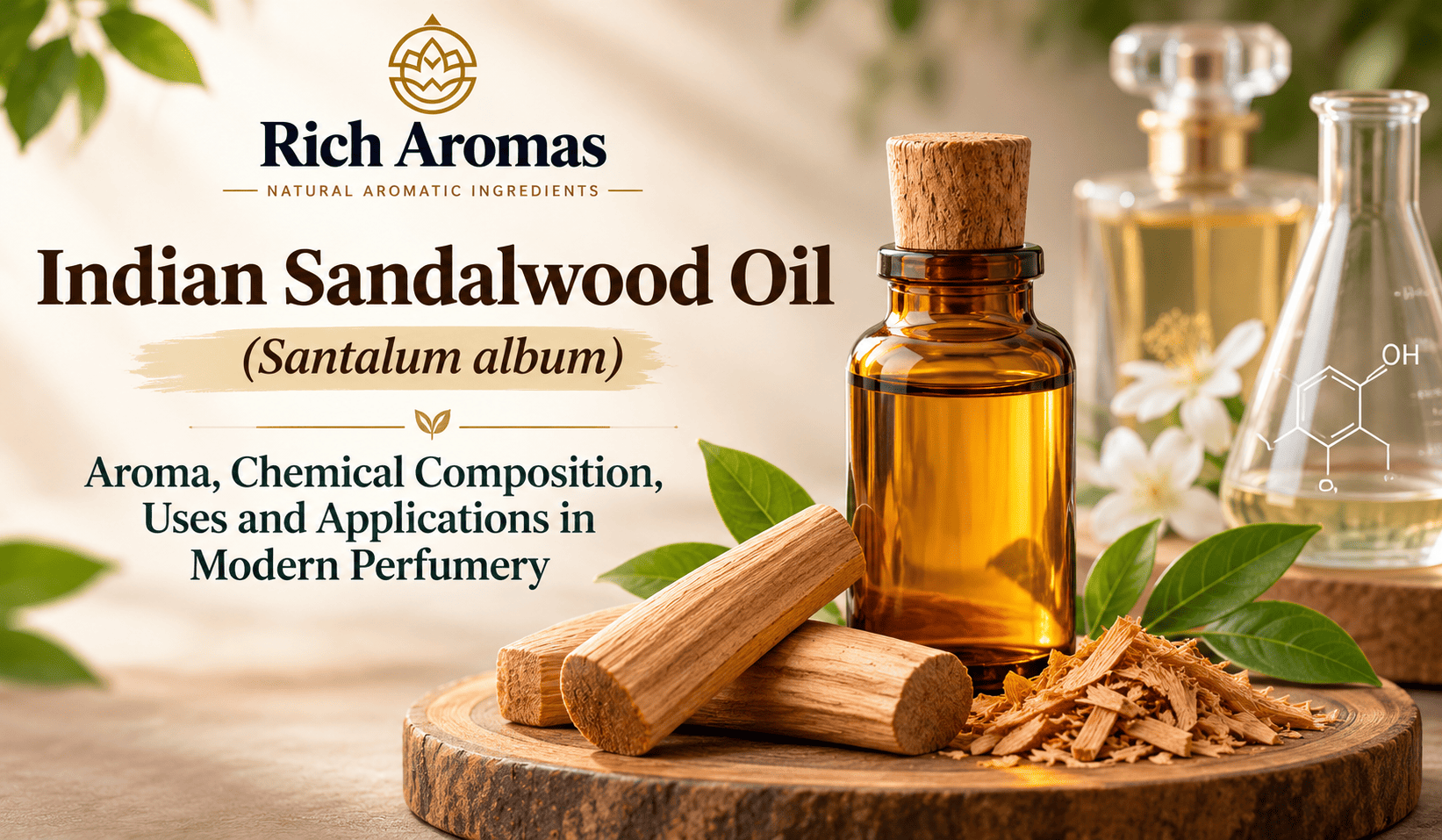
Indian Sandalwood Oil (Santalum album): Aroma, Chemical Composition, Uses and Applications in Modern Perfumery

Indian Sandalwood Oil, botanically known as Santalum album, is one of the most recognised natural ingredients in the world of fine perfumery. Known for its warm, creamy, soft woody aroma, it has been valued for generations in traditional fragrance practices and continues to hold an important place in modern fragrance formulations.

Unlike many essential oils that contribute predominantly fresh, floral or citrus notes, sandalwood oil offers depth, warmth and a distinctive woody character. Its versatility makes it an interesting ingredient for fine fragrances, personal care products, incense and other aromatic applications.

For fragrance manufacturers, perfumers and cosmetic formulators, understanding the origin, chemical composition and quality parameters of sandalwood oil is essential when selecting the right material for a formulation.

1. What Is Indian Sandalwood Oil?

Indian Sandalwood Oil is a natural essential oil obtained from the heartwood of the sandalwood tree, Santalum album.

The tree is a slow-growing tropical species traditionally associated with India. Its heartwood contains aromatic compounds that are extracted to produce the characteristic sandalwood essential oil.

The oil is particularly valued for its smooth, rich and long-lasting woody fragrance.

Unlike lighter essential oils, sandalwood oil is frequently used as a base note in perfumery, where it contributes warmth, body and complexity to fragrance compositions.

2. What Does Indian Sandalwood Oil Smell Like?

The aroma profile of Santalum album is one of its most distinctive characteristics.

Its fragrance is generally described as:
• Creamy and smooth
• Warm and woody
• Soft and rich
• Slightly sweet
• Balsamic and milky

In perfumery, sandalwood oil is often used to create rounded, elegant fragrance compositions.

It blends well with floral, oriental, woody, amber and spicy fragrance accords.

Its soft character also makes it useful for balancing stronger aromatic materials within a fragrance formulation.

3. Understanding the Chemical Composition of Sandalwood Oil

The fragrance and performance characteristics of sandalwood oil are closely associated with its chemical composition.

Alpha-Santalol (α-Santalol)
Alpha-santalol is one of the characteristic sesquiterpene alcohols associated with Indian sandalwood oil. It contributes significantly to the recognisable woody and creamy character of the oil.

Beta-Santalol (β-Santalol)
Beta-santalol is another important aromatic constituent that contributes to the overall sandalwood fragrance profile.

The relative proportions of these constituents can vary depending on factors such as the botanical material, geographical origin, age of the heartwood and processing conditions.

For professional buyers, reviewing a batch-specific GC-MS report is an important step in understanding the chemical composition and consistency of sandalwood oil.

4. How Is Indian Sandalwood Oil Extracted?

Indian sandalwood essential oil is traditionally obtained through steam distillation of the heartwood.

The general process involves:
1. Selection of suitable sandalwood heartwood.
2. Preparation and size reduction of the wood.
3. Steam distillation to release volatile aromatic constituents.
4. Condensation and separation of the essential oil from the distillate.
5. Quality evaluation and storage under appropriate conditions.

The quality of the starting material and the distillation process can influence the resulting oil’s aroma and chemical profile.

5. Applications of Indian Sandalwood Oil

Fine Fragrance and Perfumery
Sandalwood oil is widely appreciated in fine fragrance formulations for its warm, creamy woody character.

It can be used as a base note in compositions such as:
• Woody fragrances
• Oriental fragrances
• Floral woody fragrances
• Amber compositions
• Unisex fragrances

It can add depth and a smooth finish to fragrance formulations.

Cosmetics and Personal Care
Sandalwood oil is used as an aromatic ingredient in selected personal care and cosmetic formulations, depending on the intended application and applicable safety requirements.

Potential applications include soaps, creams, lotions and other fragranced personal care products.

Incense and Aromatic Products
Its traditional woody aroma also makes sandalwood oil relevant to incense and other aromatic product applications.

6. How to Evaluate the Quality of Indian Sandalwood Oil

For manufacturers and bulk buyers, evaluating sandalwood oil involves more than simply assessing its fragrance.

Botanical identity: Confirm that the material is derived from Santalum album.

Aroma profile: Evaluate its characteristic creamy, warm and woody fragrance.

GC-MS analysis: Review the chemical composition, including alpha-santalol and beta-santalol levels.

Physical and chemical parameters: Examine relevant technical specifications such as specific gravity, refractive index and optical rotation.

Batch consistency: Compare analytical results and aroma characteristics across different batches.

A combination of analytical testing, documentation and sensory evaluation provides a more comprehensive understanding of the material.

7. Indian Sandalwood Oil vs Australian Sandalwood Oil

Indian Sandalwood (Santalum album) and Australian Sandalwood (Santalum spicatum) are two distinct botanical species used in the fragrance industry.

Although both are valued for their woody aromatic profiles, they have differences in their botanical identity, geographical origins and chemical composition.

Indian sandalwood is generally associated with a creamy, rich and soft woody profile, while Australian sandalwood is often described as drier, earthier and more woody.

The choice between the two depends on the desired fragrance profile, formulation requirements, technical specifications and sourcing considerations.

Neither is automatically better for every application. The most suitable choice depends on the intended formulation.

8. What Should Fragrance Manufacturers Look for When Sourcing Sandalwood Oil?

When sourcing sandalwood oil for commercial applications, manufacturers should consider:
• Verified botanical identity.
• Reliable and traceable sourcing.
• Batch-specific technical documentation.
• GC-MS analytical reports.
• Consistent aroma and quality.
• Appropriate packaging and storage conditions.
• Supplier reliability and regulatory documentation.

For manufacturers working with natural aromatic ingredients, consistency and transparency are particularly important when developing products for long-term commercial production.

Conclusion

Indian Sandalwood Oil (Santalum album) continues to be an important natural aromatic ingredient in fine perfumery and fragrance applications.

Its creamy woody aroma, characteristic santalol composition and versatility make it a valuable material for fragrance manufacturers and formulators.

Understanding its botanical identity, extraction process, chemical composition and quality parameters helps buyers make more informed sourcing decisions.

At Rich Aromas, we believe that understanding the chemistry and quality of aromatic ingredients is an essential part of building reliable fragrance formulations.

Leave a Reply

Your email address will not be published. Required fields are marked *